Latest Posts

International Hygge Day February 28

The British hygge blog Howtohyggethebritishway.com has nominated this upcoming Tuesday February 28 2017 to become the first International Hygge Day! People are encouraged to have some hygge on that day and maybe share hygge photos on their social media followed by #internationalhyggeday

You can read about the new hygge day on this blog post from howtohyggethebritishway.com International Hygge Day

I am pretty sure International Hygge Day here at our house is going to involve lots of pastries (preferably homemade), hot chocolate, coffee, candles, flowers, nature, books and just hanging out together. So get your hygge on and do something nice and hyggeligt on Tuesday!

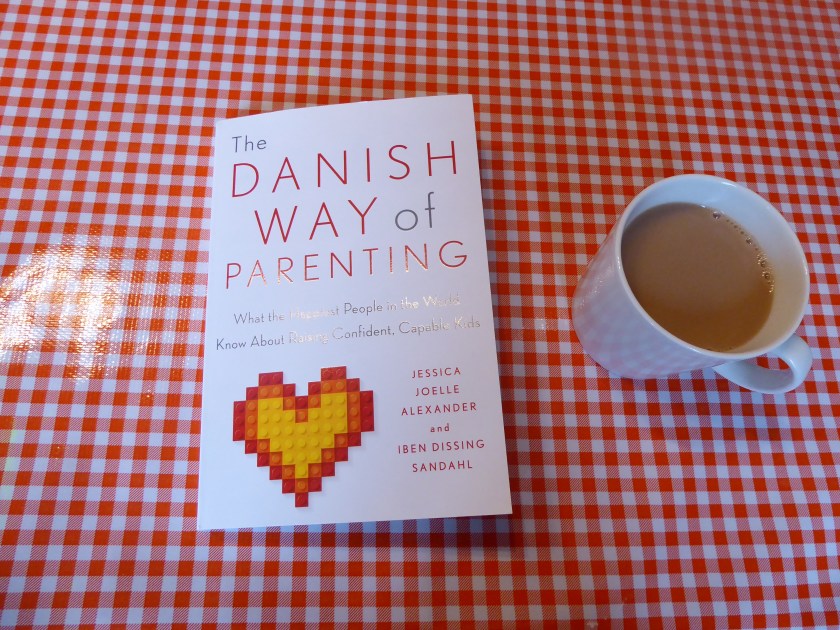
Review: The Danish Way of Parenting

When American mom and columnist, Jessica Alexander, visited Denmark she noticed how Danish children were much more calm and hardly ever threw tantrums. Their parents talked to them in a calm way without yelling. There seemed to be an unspoken Danish way of parenting and together with psychotherapist and family counselor, Iben Sandahl, she set out to investigate how the Danes raised happy and balanced kids. Based on more than thirteen years of experience, research, supporting studies and facts this resulted in a book about how the happiest people in the world raise their children.
The Danish Way of Parenting is my new parenting bible. As a Dane raising my children abroad I am eager to bring this parenting style with me and raise happy little Danes. To me the book is very useful and keeps me straight when I doubt my instincts surrounded by different cultural practices. But the book might be even more useful to non-Danes who wishes more calm, independent, creative children who do not constantly need entertainment and praise. In short, The Danish Way Of Parenting provides clear guidelines on how to give your children a strong sense of self-worth and inner drive by having healthy social and emotional bonds. Even if you are only able to follow a few of the guidelines the authors write that you will still see results. And sure enough, after I read it the first time a year ago my children hardly ever have tantrums anymore and when they do I know how to deal with them in an understanding and helpful way so we do not end up in power struggles. This does not mean I am the model Danish parent at all and I still have lots to work on as most of us probably do…
p1000724

I will try to give you a brief idea of what the Danish way is about – the brief part will be a challenge for me as I can go on and on and I wish to share every single insight I gained from this book with you (I actually found myself clapping to myself and texting friends in excitement while reading it, just to give you an idea of how much I love it)!
The book is very clearly written and divided into what the authors find are the six keys to Danish parenting following the letters in PARENT (Play, Authenticity, Reframing, Empathy, No Ultimatums, Togetherness/Hygge).

The P in PARENT stands for “Play”. Free, unstructured play is valued very highly in Denmark. It is children’s way of learning important life skills. Through play they learn to adapt and approach a problem in flexible ways. By learning how to get along with each other and figuring things out on their own children build a strong foundation for dealing with difficult people and challenging, stressful situations later in their adult life. Danish children are allowed to develop in their own pace with less pressure to perform which helps them develop self-esteem and reduce anxiety. I could go on and on about the value of play and I cannot help but think about the high amount of innovation coming from a small population of 5.5 million Danes (LEGO, all that design…). Could it have something to do with Danes allowing children the time to let their own mind create new worlds through play? So definitely, make sure your children are allowed time and space to just play. For this to happen it is necessary to turn off or limit screen-time (so hard, believe me I know…)
img_3797

The next letter in PARENT is A for “Authenticity”. Danes tend to be pretty honest and will not tell you that “everything is great” if it is not. They embrace all emotions, also the so-called negative ones in themselves and in their children. This makes children feel safe because they are still loved when they are sad or angry. Moreover, this emotional authenticity makes them stronger because they will be able to follow their own true emotions later in life, instead of trying to make other people happy and acting “the right way”.
Another thing I found extremely interesting was the authors’ point about praise and authenticity. In America, children are, generally speaking, praised for even minor accomplishments. In Denmark, parents tone the praise down and focus on the effort that was put into something. In this way children learn that no one is inherently smart or good at something but that learning new things is a process involving hard work. I personally tend to praise my children for every single drawing they make and I have to keep reminding myself to ask them to tell me about the drawing instead of automatically praising it. This actually produced a really interesting story from my five-year old who told a long story about two royal children just by telling me about her picture! I would never have discovered what goes on inside her head if I had just told her it was a “great drawing”.

R for “Reframing” is about putting things into perspective. Apparently Danes are good at reminding themselves and their kids that things could be worse. So for example if a child played badly at a soccer game you remind them that they played well the weekend before and at least they did not break a leg or something like that. Danes are “realistic optimists” which means that they do not ignore negative things but remind themselves that another more positive side of the problem also exists. Like when it is cold and dark outside Danes will say that at least it is not raining or they will say it is perfect weather for hygge/coziness inside. There is so much power in how we talk and think about things.

“E” stands for Empathy. Modern society and especially American society focuses a lot on individual happiness whereas research has shown that we gain more happiness by not just thinking about our own but also other people’s happiness. Danes try to point out the good in others instead of giving them a negative label. Parents model empathy by hardly ever judging others (i.e. maybe the angry woman in the supermarket just had a bad day). Likewise they try to empathize with the whole range of their own and their children’s emotions. It is natural to feel anger and jealousy and the best way to handle those emotions is to face them and talk about them instead of labelling someone as a “difficult child” etc.
“N” is for No Ultimatums. The authors call Danish parents “authoritative” which means they set rules but are still understanding and responsive. This is different from authoritarian parents who demand without responding. Danish parents believe that children are inherently good and that bad behavior does not mean a child is a bad child, it is merely the behavior that is undesirable. What is called “the terrible twos” in America is called “trodsalder” (“the boundary age”) in Denmark. This is a good example of how Danish parents view it as normal for two-year olds to push boundaries whereas Americans focus on how annoying and terrible it is for the parents. It is very helpful to remind yourself of how children at that age have a natural developmental need to push boundaries instead of viewing it as misbehavior to be punished. By modeling respect and calmness parents receive the same behavior from their children. For how can we expect calm children if we are not calm ourselves? Being a good role model seems to be the most important part of parenting as your children will mirror themselves in you. So modeling self-control is much more efficient than ultimatums and punishments.

Last but not least comes T for “Togetherness” or the popular concept of hygge! Danes have a good understanding of the importance of close social bonds and they value good times with close family and friends very high. In fact, Danish families can just hang out and relax together for extended periods of times. At first, this seemed strange to the American author of this book because her American family would quickly get annoyed with each other and need a break and she could not understand how her Danish family-in-law was able to cozy around each other without more drama. The core of hygge/togetherness is to make sure that everyone feels good and to think as a “we” not an “I” – everyone’s happiness matters and it is not hygge if one person only cares about themselves or if there is drama. Hygge is thinking as a group and putting negative things aside.
I love the authors’ point that: “If you substitute “We” for “I”, even “illness” becomes “wellness”. Strong social ties are so important for our happiness, health and ability to function well in the world.
img_1461

At first sight the Danish way might seem a little soft but in the long run it really works! The Danish Way of Parenting is not only a great parenting book, it is also a guide to become happier and stronger as individuals and as a family unit. It has become a global success and parents all over the world are following the methods and even forming groups to support each other in practicing the Danish Way. As a matter of fact, I would love to form a group like that both locally and online. So contact me if you are interested (happyasadane@gmail.com).

Now, I will just recommend everyone to go out and buy this book or check out The Danish Way of Parenting’s website with lots of great articles and helpful advice:
The Danish way website
You can also look out for my interview with the two authors of The Danish Way of Parenting coming up on this blog in the near future.

A Hygge Night in Nyhavn

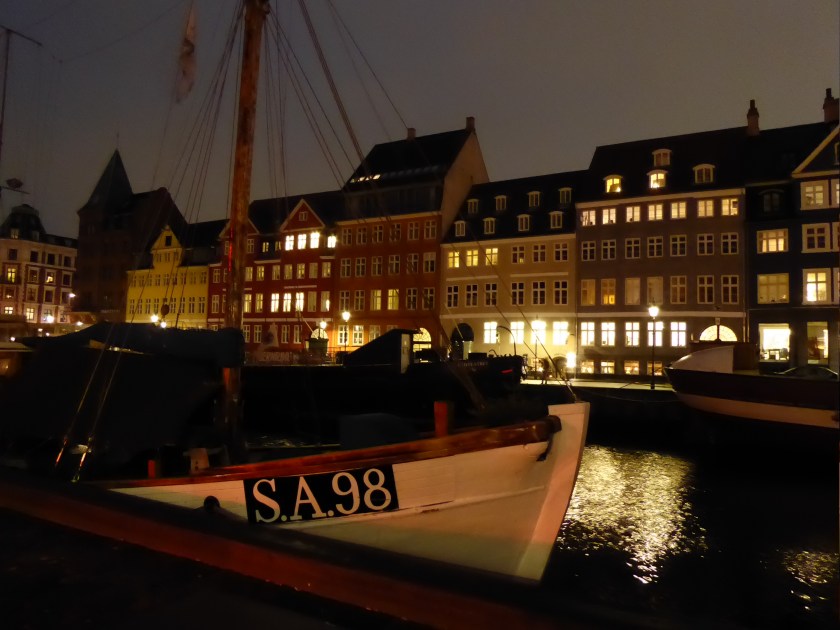
A great way to experience “hygge” and to be happy as a Dane is to spend time in Copenhagen’s lively old harbor, Nyhavn (New Harbor). Nyhavn is a “must go to” for both Danes and tourists. Whether its a sunny summer day or a cold winter evening, Nyhavn is a happy place to relax in one of the many cafes or just take a stroll along the water. This used to be the place where sailors took a break from the sea in one of the many bars. Even Hans Christian Andersen lived here for a long period of his life and wrote many of his famous fairytales like The Princess and the Pea. Since then it has been thoroughly renovated but the happy atmosphere lingers on – so much so that CNN has named it one of the 15 happiest places in the world.

This Christmas my husband and I were so lucky to spend one night of happiness in the most “hyggelige” hotel I have ever been in, right on the outer corner of Nyhavn with a view over the old harbor! 71 Nyhavn Hotel was luxurious and oozed with “hygge” – a perfect combination of old and modern. Just imagine wooden beams and Danish design furniture in the same place!

Even though my first instinct was to just stay in at this amazing hotel room my husband finally dragged me out to Nyhavn, Kongens Nytorv (The Kings Plaza) and the shopping area of inner Copenhagen. There is something really “hyggeligt” about being outside on a cold and dark evening looking at the many windows full of warm golden light and imagining all the “hygge” taking place inside those homes… Just take a look at the photos below and see if you can find some “hygge” there.

“Hyggelige” or not, the streets were also cold and windy so we were happy when we entered the old department store, Magasin, nearby. There is also something “hyggeligt” about Magasin – maybe it is the beautiful old building, maybe it is the pretty lights decorating it, or maybe it is the dimly lit basement where Claus Meyer has a bakery, cafe and sandwich bar and where you can find a lot of other delicious “hygge” foods, such as Summerbird chocolate, Johan Bulow licorice, a wine bar and a small supermarket. With enough money you can definitely enjoy life in Magasin. There are now two Joe & the Juice bars and in the spirit of the upcoming New Year there were even a champagne and cocktail bar on the upper floors… I could easily spend a whole day in Magasin.

After some “hygge” night-time shopping we walked down the old streets of inner Copenhagen to the restaurant Höst where we were going to enjoy our dinner. As soon as we saw the entrance of the restaurant we knew we were in for, not just a culinary experience, but also a “hyggelig” experience…

p1000226

The first thing we noticed when we entered Höst was the smell of fire! Were they having a bonfire in there or just a new kind of smoke scented candles (not a bad idea btw)? Next thing we saw was a plate on fire! Literally. A table of excited guests were being served a dish with small juniper twigs on fire to give that “hyggelige” smoky flavor and scent!

Never have I been to a restaurant this dynamic and full of life! We had a table at 9 pm and left around 11 pm and it was packed the whole time! But the most exciting part was the food of course. From the moment we ordered the seasonal menu, exciting dishes and drinks started rolling in. There was no more than maybe five minutes of waiting between the dishes and each one of them took our tastebuds on a pleasant journey where they had never been before. I always thought it was kind of snobbish with these kinds of sophisticated little dishes but I was proven wrong. It was so fun and there were several times I heard my husband shout out loud with excitement. He is a food-lover, who claims to travel with his stomach, and he was blown away. So definitely, Höst is “the Noma for the masses” and I will recommend everyone to try it if they get the chance.

The next morning we woke up greeted by the bright harbor light outside our windows and the beautiful view of the old buildings. After an invigorating shot of Nespresso in our hotel room we stepped out to one of the happiest places in the world, Nyhavn and enjoyed some of the best pastries in the world at the bakery Lagkagehuset while watching the busy street life in the city of my heart. I could not have been a happier Dane.


I am a Danish anthropologist and writer and I live in USA with my Danish-American husband and our two small children.

With this blog I wish to bring Denmark to anyone who wants to “go there” – it will be a virtual Denmark as I love it. I want to help you, as well as me, find Danish inspiration even when not in Denmark and to become happy as a Dane.

If Danes are among the happiest people in the world why not export the best of their culture to the world?

First, there is that unique Danish term “hygge” – roughly translated as “coziness”. So lets “hygge” and have a cup of coffee together while we learn about Danish happiness…


p1000661

Kahler cup and Kahler lighthouse

Hygge – by a Dane in America

As a Dane living in America I could not be any happier about the recent invasion of hygge to the United States and a lot of other countries! I love American culture and Americans. Especially their openness to new cultures and immigrants and their willingness to embrace what is new and different. But there is one thing I have been missing during the seven years of living here and that is a slower pace, more family time and the ability to just enjoy the moment – in other words: hygge! Many Americans are very busy, their kids are very busy/active and I believe a little more down time would do us all well. This has become of extra interest to me as I am raising my children in America and I want them to be as happy as the Danes.

My favorite example of the difference between Americans and Danes is how coffee is mostly “on the go” over here while in Denmark it is typically something you enjoy sitting down, preferably while talking with a friend. I had a Swedish friend in Denmark who loved the Danish standard phrase of: “Lets sit down and have a cup of coffee.” Danes take these breaks of appreciating simple pleasures in life and being in the moment with hygge and I truly believe it contributes to their happiness and creativity.

To me it is almost surreal that suddenly everyone is talking about something so fundamental to Danish culture as hygge. Yesterday I heard a Danish folk song played on American National Public Radio (NPR) and I had a hard time holding my tears back. Suddenly American friends come to ask me about hygge and Danish culture. I do not think I could have it any better as an immigrant, my culture is coming to me! But I am not only happy on my own behalf, also for Americans – that they get to enjoy this wonderful cultural phenomenon which is so hard to capture in words (both linguistically and culturally). To put it as simply as possible: hygge is about feeling good.

Let me give an example of what hygge can be. Last night we had some very good friends over for “julefrokost” ( or “Christmas lunch”). We decided to have this “julefrokost” in January because December was too busy. All we did was hang out and talk over different traditional Danish dishes and just have a good time. We all felt comfortable and relaxed as we have a lot in common and understand each other well and no uncomfortable topics such as politics or anything else that could divide us were brought up. We were just having a hyggelig time in a hyggelig atmosphere.


There is no recipe for hygge and very often hygge does not involve wool socks. It is pretty much anything that makes you feel comfortable and like being yourself. You can not really have hygge at a big party where you may feel pressured to make a good first impression, be funny etc. You feel hygge best around people who make you feel comfortable and among whom you can be yourself. Or you could simply just be alone and enjoy something like a book or a movie. I think hygge is very much about how we feel inside. Whatever makes you feel comfy, cozy and warm – be it a wool blanket, a feel-good movie, a great book, close friends, family or a cup of hot chocolate… or something completely different. As Meik Wiking mentioned on the radio program On Point, being in a cabin together with good friends around a fireplace safe from a raging storm outside is probably the ultimate hygge. Yes, there are several degrees of hygge! Some things are more hygge than others. Something as simple as a talk with someone can be hyggelig if it makes you feel good and comfortable. But I think many agree that the most hyggelige would be to be in a cabin in front of a fireplace with people you love while a storm is raging outside!

To have hygge you have to feel safe. If someone or something makes you feel uncomfortable that is NOT hygge. So leave out those pushy remarks of “When are you getting married?” or “We would love to have grandchildren soon”, or “Shouldn’t you start looking for a job?”… Such comments can transform a hyggelig atmosphere into something where at least one person just wants to leave ASAP. Hygge is something you want to enjoy for as long as you can.

p1000074

Welcome to a “hyggeligt” house

A big part of Danish hygge is how much we use the word. Like the American standard phrase is “How are you?” The Danish is: “Hyg dig!” (“Have hygge!”). I even had a friend who instead of saying goodbye just said “Hygge!” as if he demanded you to go and have hygge.

Hygge is used about almost everything that makes you feel comfortable. My Danish- American husband recalls how his Danish relatives would use the word “hyggeligt” about pretty much anything. As if the Danes want everything to be hygge. It is also a great compliment to tell someone that you had a hyggelig time with them – hygge seems to be the ultimate goal for social gatherings in Denmark. This brings me to the point that a great part of Danish hygge is the importance that Danes put into the concept. It is so important to us that we use the word all the time! While most other nationalites probably already know a good bit about what hygge is without calling it hygge and do it every now and then, the greatest difference is in how much we value hygge in Denmark and how we prioritize this special time for feeling good and having a hyggelig time. This is very likely a big part of the reason why Danes are consistently rated the most happy people in the world – that we take these hygge breaks from our busy and stressful everyday lives to recover mentally and emotionally. Just looking at my own children I can see how much hygge means to their emotional well being. They become emotionally healthier, more balanced and resilient when we live a life where hygge is prioitized.

In this blog I share my pursuit of creating Danish hygge and happiness for my family and hopefully also yours. Often a culture becomes more understandable when you move away from it. I have found that you do not have to be in Denmark or from Denmark to be able to have hygge and I certainly believe that everyone who wants can learn how to hygge.

Weekend Hygge and Aebleskiver

This weekend was a true “hygge” weekend. After returning from Denmark last weekend – and a veeeery long airplane trip with two young children – all you need is “hygge” and relaxation. We even got a little snow and extremely cold weather which made the need for “hygge” even bigger. And I learned that the thought of “aebleskiver” and hot chocolate awaiting inside actually made me enjoy being outside with the kids in spite of what felt like minus 17 degrees celsius. Danish “aebleskiver” is the ultimate Christmas/winter comfort food. They are little dough balls made out of a pancake-like batter, baked on a special “aebleskive pan” sprinkled with powdered sugar and dipped in strawberry jam.


When we didn’t eat comfort food and sip hot chocolate we cleaned up all (almost) our clutter, making room for more “hygge-space”. I have finally realized that clutter/mess interferes with the “hygge” feel and it is more pleasing to only have a small amount of decorative items on display. This way you can fully enjoy looking at your favorite things!

As you can see in these photos I am working hard on making our mantel more pretty and “hyggelig”. I call it a “Hygge hylde” (meaning a “hygge shelf”) which is a place to put happy and hyggelige things that I love looking at. I got the idea from my aunt in Denmark who had a shelf with pretty and colorful tins in her otherwise white kitchen.


For “aebleskiver” I found this old Danish family recipe:

Aebleskiver

Ingredients:

125 g all-purpose flour

1/4 tsp salt

1 tbsp sugar

1 tsp lemon juice

1/4 liter buttermilk

1 egg yolk

50 gram melted butter

1/4 tsp baking soda

1 egg white


How to make them:

Mix flour, salt and sugar.

Stir in the lemon juice  and buttermilk a little at a time. Then add the egg yolk.

Just before you bake them on the “aebleskive pan” stir in the melted butter. Whisk the egg white and baking soda stiff and gently fold it into the dough.

Heat the “aebleskive pan” up on the stove. Add a little butter in each hole of the pan and fill them 3/4 full with dough. Flip the aebleskiver when the bottom is firm and bake them for about 8 minutes total on medium heat. Turn them frequently with a fork.

Eat them right away or keep them warm in a baking pan in the oven on low heat, covered with silver foil. Serve with powdered sugar and strawberry jam…

For Kirsten’s Hot Chocolate recipe see this link: Hot chocolate in the snow! It is addictive though – once you start you will want to make it every day!


Bringing Hygge into January

Leaving the festive and “hyggelige” (cozy) month of December behind and entering January is for me always followed by a certain sadness. Gone are all the Christmas decorations, parties, comfort foods and “hygge” (coziness/togetherness). Instead we get New Year’s resolutions of eating healthy, working harder and all the demands of starting a new year in the cold Winter months. This year I am determined to keep the “hygge” from December going. Maybe not with Christmas gnomes and ornaments but the comforting “hygge” part.

p1000355

“Bakery by Hermann” in Lyngby, Denmark

The photo above from “Bakery by Hermann” in Lyngby, Denmark, captures what my January “hygge” will be like – soft and cozy lambs wool throws and hearty baking the Danish way. I love how this bakery brought the lamb skins outside on a bench. That is exactly how I envision myself in these cold winter months ahead of us: sitting on my porch on a warm lamb skin with a steamy hot drink – be it hot spiced wine, coffee or hot chocolate. This way January can be the month of relaxation and “hygge” after the hectic December. I wish you all a Happy and “Hyggeligt” New Year!

A Magical Christmas Night in Tivoli

The old charming amusement park, Tivoli, in the heart of Copenhagen is beautifully decorated for Christmas. We had a magical night there surrounded by “snow”, pretty lanterns, lights, Christmas trees and ornaments everywhere. We bought Danish “aebleskiver” and “glögg” (hot spiced wine) from one of the many snow covered wooden pavilions and enjoyed it outside on cafe chairs with blankets wrapped around us. Does it get any more “hyggeligt”/cozy than this?

img_8711

“Aebleskiver” a pancake like dough baked in a special pan with holes so you get those little ball shaped cakes topped with strawberry jam and powdered sugar

A Danish Christmas

Here is a little sample of my Danish Christmas. The old streets of Copenhagen decorated with garlands, lights, hearts and stars. White hyacints and pine cones are important too. But lets not forget the mouth watering marzipan (almond paste) and nougat on coffee tables all around the country…

I know bicycles aren’t exactly a Christmas thing but only in Denmark will you see a baby chair that matches the color of the mother’s bicycle! Says so much about the importance of bicycles and design to the Danes.